
The Southwest Circuit: 9 Days of Red Rocks, Rails, and Riesling
I am officially back at my home base in Park City, though my favorite hiking boots are still caked in a very specific, stubborn shade of crimson dust. I just wrapped up what I’m calling the Grand Southwest Circuit; a 1,200-mile, 9-day odyssey that proved you can absolutely pair a rugged slot canyon with a perfectly chilled glass of high-altitude Riesling.
Since moving to Utah, I’ve been itching to execute a real road trip. Living out west means you’re constantly surrounded by “once-in-a-lifetime” scenic destinations right in your backyard, but never quite have the time to explore them with the style they deserve.
So, I built a highly calculated, purposeful itinerary. The goal? To see some of the crown jewels of the Southwest while working our way down to the ultimate showstopper (the bat flight at Carlsbad Caverns), all with enough strategic downtime to ensure we didn’t end up wanting to divorce each other by Day 5.
You see, the secret to surviving a multi-destination desert haul is in the logistics, not just buying a full tank of gas (though you’ll need several of those, trust me). If you are the kind of traveler who craves the raw, cinematic beauty of a National Park but demands the comforts of a soft bed and an excellent charcuterie plate, then grab a glass of wine (okay, fine, two glasses) and let’s talk strategy.
Days 1 & 2: Moab – Arches, Rapids, and Red Rock Geometry
We kicked things off on a Saturday, aiming for a high-noon arrival in Moab.
 Let’s be real about Moab: it is the ultimate high-desert crossroads with 5 National Parks within a day-trip distance of the town. It’s a buzzing, red-rock basecamp that perfectly bridges the gap between rugged utility and cozy vacation-town convenience. It is absolutely packed with stellar local eateries, eclectic gear shops, and every outdoor outfitter you could ever need; which is precisely why it’s the dream staging ground for conquering Utah’s red rock country. We grabbed a quick, delicious bite to fuel our afternoon, prepped our daypacks (water is critical here!), and headed directly into the furnace of Arches National Park.
TCT Tip: The National Park Pass Strategy: Entrance to Arches costs $30 per vehicle. If you’re visiting more than one park on this circuit (and we hit four), do not waste time buying individual passes. Invest in the America the Beautiful Pass ($80). It pays for itself by your third park gate, grants you expedited entry lanes in certain spots, and 100% of the online sales go directly back to national park maintenance. Practical and philanthropic.
A Tasting Menu of Arches (Minus the Crowds)
Arches is notoriously congested, but there is a science to beating the traffic. Our first target was Balanced Rock, a stunning example of differential erosion. The top is a massive block of Entrada Sandstone, sitting precariously on a pedestal of softer Dewey Bridge mudstone. Eventually, in a few hundred or thousand years, the base will give way, and the 3,600-ton “head” will come crashing down.
TCT Warning: The Turnout Trap: Balanced Rock is easily viewed from the road, which means every rental RV in Utah will try to squeeze into the tiny parking lot at once. Do not park illegally on the road. If the lot is full, circle back in 15 minutes; the average tourist’s attention span here is incredibly short. After all, it’s a rock balanced on another rock.
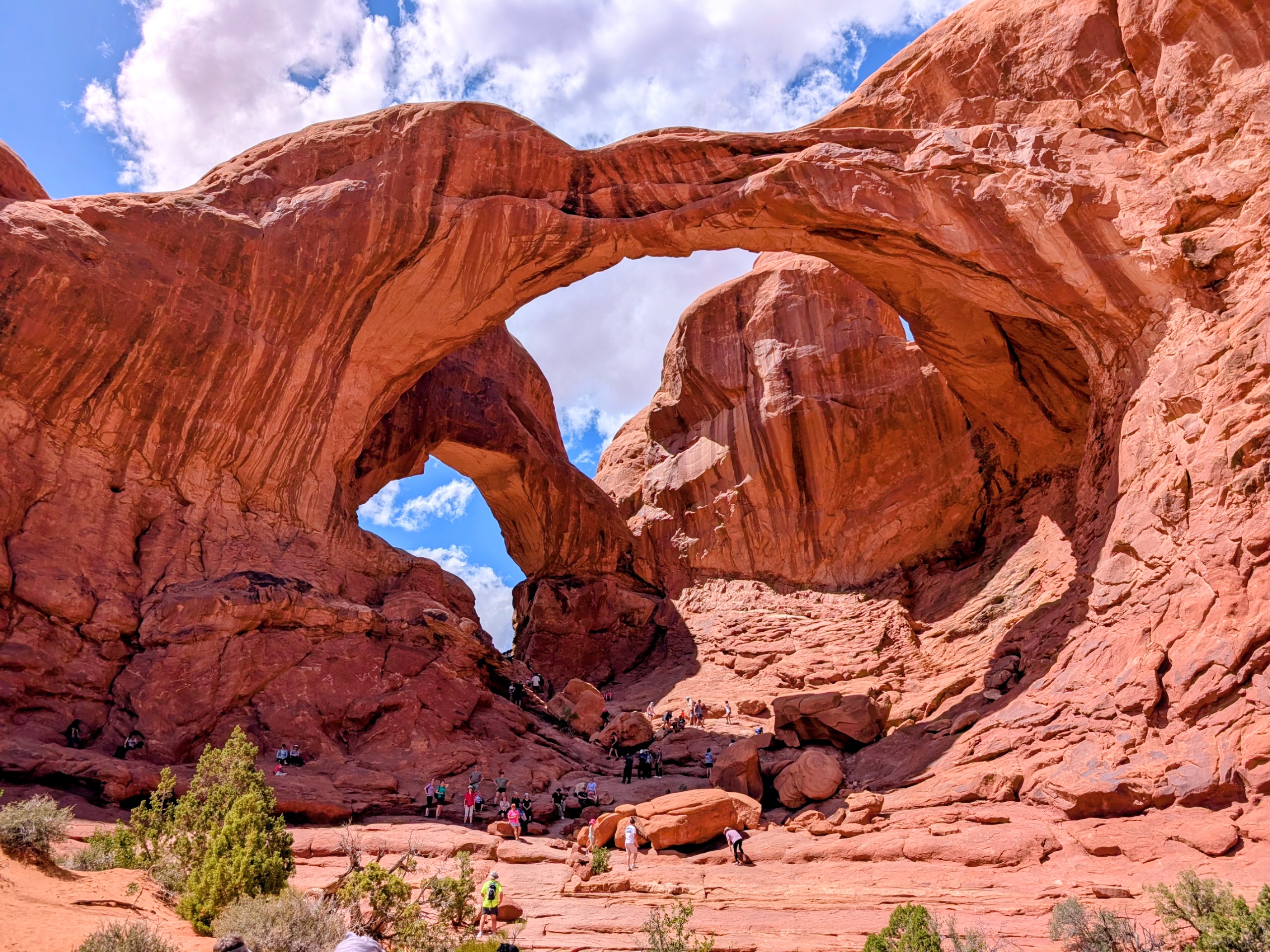
From there, we bypassed the crowded trails and drove straight to the Windows Section and Double Arch. Out of all the geological architecture we surveyed, Double Arch was my undisputed favorite. It’s a brief, sandy walk to the base of two massive, intersecting arches that cast deep, majestic shadows.
When we arrived, the temperature was already pushing 85F (and it was only late May!). So we appreciated that the Double Arch acts like a giant, natural air conditioner; the rock walls funnel the breeze, making it the perfect shaded sanctuary to sit, sip some water, and escape the oppressive high-desert sun.
We closed out our first afternoon at the Delicate Arch Overlook. If you’ve ever looked at a Utah license plate, you’ve seen this arch.
TCT Tip: The Sunset Strategy:
Do not hike the main, brutal 3-mile trail to Delicate Arch in the dead of afternoon heat unless you enjoy heatstroke. Instead, take the short walk up to the Upper Overlook just before sunset. The iron oxide in the sandstone catches the low-angle light, turning the formation into a glowing, neon-orange beacon against the darkening sky.
Fisher Towers & The Hidden Arches
After the first day sampling several arches from easy walks and drive-bys, we started Sunday at an entirely different elevation - on the river!
Morning Mission: Rafting the Colorado
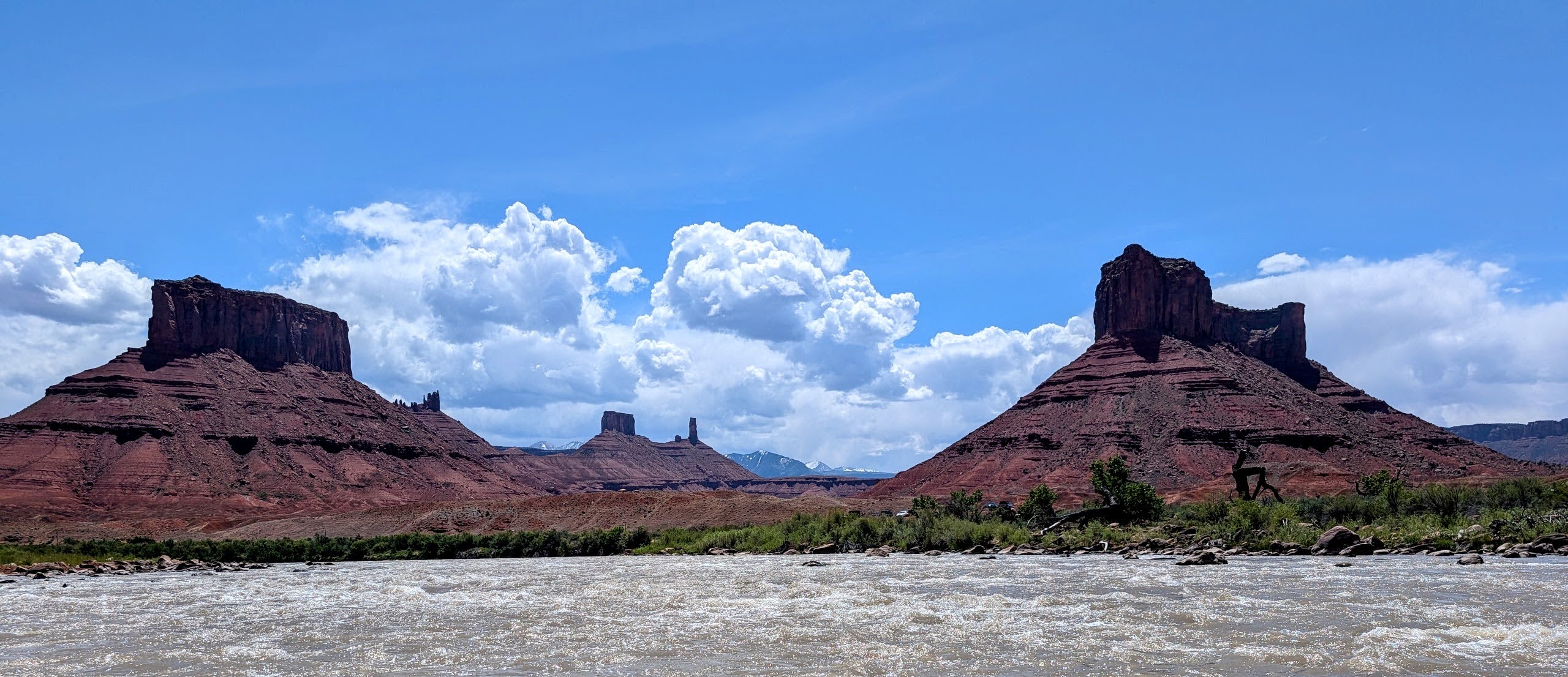
We booked a half-day float trip with NAVTEC Expeditions (Note: I may earn a commission if you book through this link at no additional cost to you) to glide down the spectacular canyon carved below Fisher Towers. While not a private charter, it almost felt like it compared to the local competition. Our launch had a cozy, exclusive vibe with only two rafts in our group, whereas some of the other outfitters on the river were guiding massive, chaotic flotillas of up to seven rafts into the water at once. NAVTEC does give you the option to paddle your own inflatable kayak (“duckie”) if you want to be active, but I opted to bypass the manual labor, enjoy the luxury of having a professional guide do all the rowing, and fully embrace my inner lazy cat.
For anyone nervous about any body of water that doesn’t feature a swim-up bar and a paper umbrella, relax: this is a beginner-friendly Class I and II stretch. It was essentially just enough splash to keep things interesting without risking my cocktail hand or my camera.
Floating past those 1,000-foot mudstone skyscrapers gives you a sense of scale you simply cannot get from a trail. Plus, you drift right past Sorrel River Ranch Resort, where the Hollywood elite hide out during and after filming (did you know Moab hosts up to five major film productions a year?). I kept my eyes peeled for a rugged, off-duty movie star, but alas, I only spotted a very majestic blue heron. Next time.
Afternoon Mission: The Arch Double-Feature
After a quick wardrobe change, we tackled the hike from Sand Dune Arch to Broken Arch - a supposedly easy 2.6-mile loop.
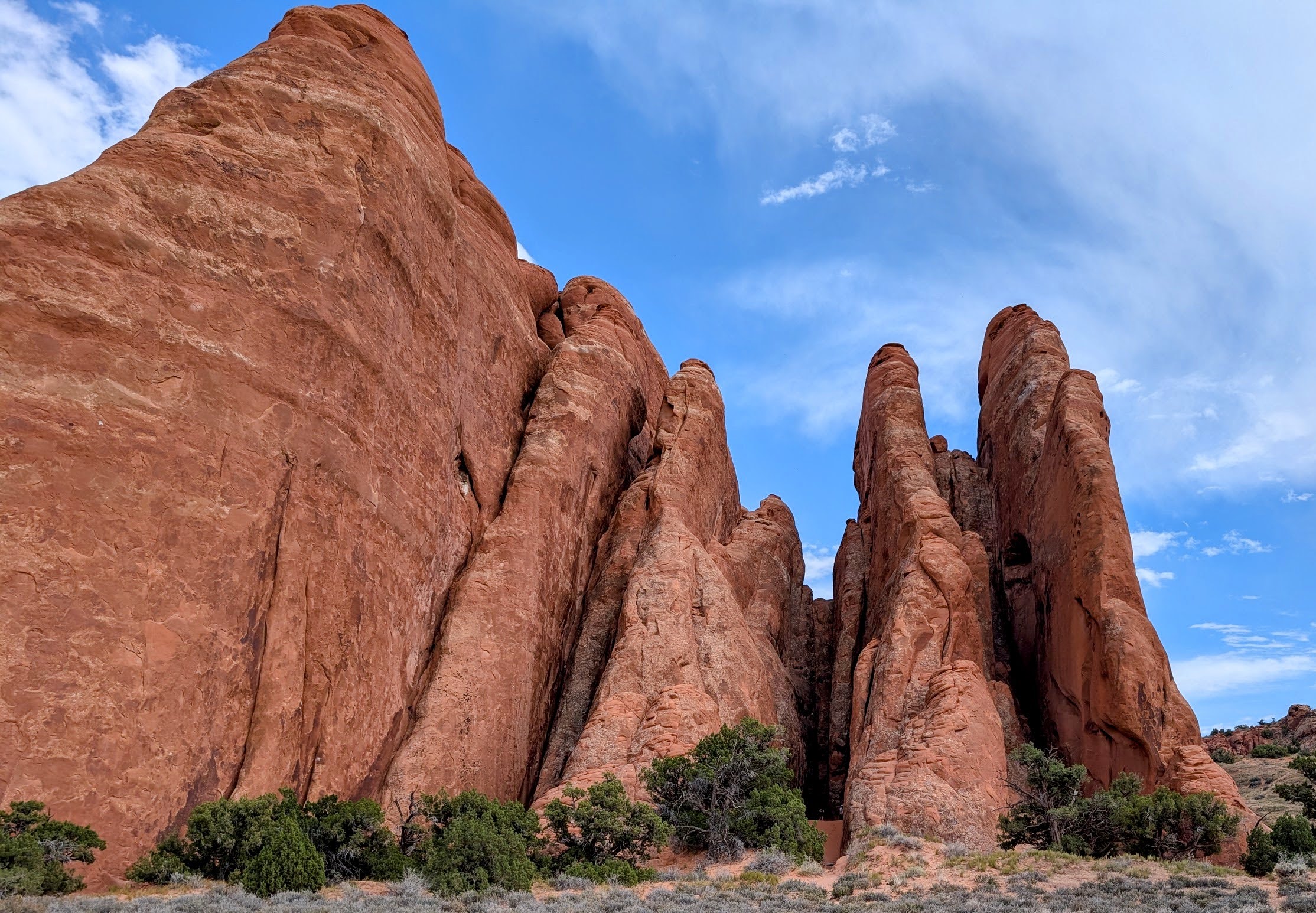
Sand Dune Arch is tucked away between deep, towering fins of rock. It’s entirely shaded, features deep, cool, powdery sand, and feels like a secret desert beach. It looks like an incredibly cute, low-stress family spot. We saw parents hauling in picnic chairs, coolers, and even plastic sand toys for the kids to build sand castles in the cool shade while escaping the brutal afternoon sun.
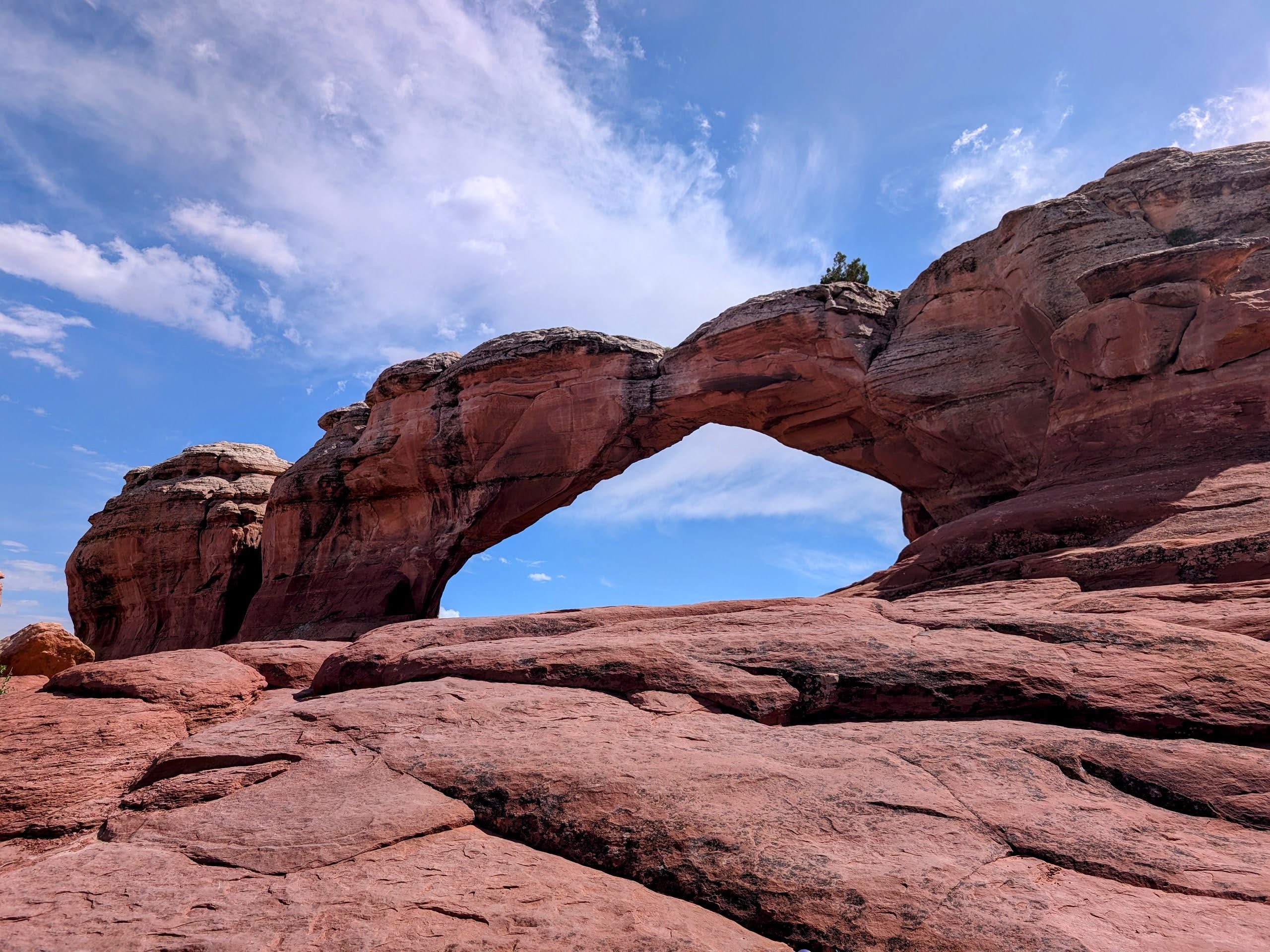
After enjoying a bit of the shade and definitely having some second, maybe third, thoughts about returning to the heat for the rest of the hike, we continued onward toward Broken Arch (which isn’t actually broken, it just has a giant structural fissure running down the center). To complete the loop, you must scramble directly through the center of the arch. I thought this was incredibly fun; my husband, who does not share my mountain-goat genetics, was slightly less thrilled.
To make things even more interesting, the trail quickly morphs from a clear sandy path into a vast expanse of open desert meadow and slickrock where the route becomes notoriously difficult to track. The path here is marked only by occasional rock cairns (those are the little small, easily missed stacks of stones) that require an eagle eye to follow.
TCT Tip: Don’t Wing the Navigation: Before you lose cell service at the park gates, make sure you download the trail map on AllTrails or equivalent service. Having an offline map to double-check when a cairn disappears is an absolute lifesaver out here, keeping you safely on track under a punishing high-desert sun.
After passing through the meadow past Broken Arch and up the next slickrock scramble and back down the other side, the rest of the hike is a scenic squeeze through a maze of towering sandstone fins. Pay close attention here: when navigating between these massive rock walls, you will reach a critical fork. Take the left path, not the right. The right path looks tempting, but it leads directly into a steep, frustrating dead-end fissure that will force you to double back. Follow the left route to squeeze comfortably through the fins, complete the loop, and guide yourself smoothly back to the starting trailhead.
TCT Warning: The Shade-Free Reality Check: The desert has a sneaky way of making short, relatively-flat loops feel incredibly intense the second you step out of the shadows. Which on this route, happens as soon as you leave the high walls of Sand Dune Arch. If you choose to tackle this loop, you must be fiercely cautious about that lack of shade, know your personal limits, and never be afraid to advocate for yourself. Asking your trail partner to stop for a break isn’t a defeat - it’s just smart adventure planning. Go at the pace that is actually right for your body, not the pace of the person in front of you.
My usually stoic husband chose to ignore his own internal warning signs, skipped a few crucial rests, and paid the price with a touch of mild heat exhaustion. We immediately pivoted: scrapped the rest of our hiking plans, retreated to our cool room to refresh, then enjoyed some gourmet wood-fired pizza, and called it a night.
Day 3 & 4: The Long Glide South & The Mid-Trip Reset
On Monday, the true “road trip” rhythm took over as we pointed the meow-mobile south toward the historic, artistic enclave of Santa Fe, New Mexico.
Given that I do not particularly like long drives in a car (most cats don’t, which makes it odd that I chose the roadtrip), I strategically routed our drive through the high-altitude vineyards of northern New Mexico for a little compensation stop.
The Strategic Sip: Vivac Winery
 Tucked away in the rugged hills of Dixon, NM, sits Vivac Winery. New Mexico’s wine pedigree is one of the best-kept secrets in North America; they’ve been cultivating grapes here since 1629 (long before California even thought about it).
Because Vivac sits at a staggering 6,000 feet of elevation, the vines experience extreme diurnal shifts: blistering hot days followed by freezing mountain nights. This thermal shock preserves the grape’s natural acidity while developing intensely complex, deep flavors.
TCT Tip: High-Altitude Viticulture: I will be the first to admit my personal bias: I am a white wine drinker through and through. Vivac’s Riesling, Grüner Veltliner, and Rosé were exactly what I wanted after a long drive - crisp, not-too-dry, and incredibly refreshing. That said, even though I usually skip the reds entirely, I knew they were famous for their Tempranillo. I was pleasantly surprised to find it smooth and delicious even by my not-a-red-wine-person standards. And if you actually prefer red wine, you are in for a real treat. This high-desert region is highly acclaimed for bold reds because the rocky, volcanic soil and intense altitude produce incredibly rich, structured grapes. Make sure you grab a few bottles to enjoy at the hotel.
The Non-Negotiable Rest Day
We checked into our home base for the next two nights: a casino resort just north of Santa Fe. This was a purposeful choice; I wanted a massive pool, a gaming floor for my husband, and we wanted absolutely no need to leave the property if we didn’t want to. It was the ultimate lazy luxury plan. Day 4 was intentionally designed as our Mid-Trip Reset.
In my years of planning week-plus vacations, I’ve identified a universal truth: Day 4 is the Danger Zone. It’s the exact moment vacation fatigue sets in. You’ve packed, unpacked, hiked, and driven; if you do not schedule a mandatory 24-hour pause here, the trip quickly devolves into a series of petty arguments about who is officially the better driver (me) or who was responsible for taking that spectacular wrong turn three hours back (him).
Originally, the plan was simple: my husband would hit the casino floor while I claimed a private, poolside cabana with a book and a fruity cocktail complete with tiny umbrella.
Naturally, the travel gods laughed. A sudden cold front swept through the valley, dropping the temperatures into the 50s.
The Pivot: We traded the pool for Santa Fe’s world-class gallery scene. If you’ve ever shopped for fine art in Sedona or Park City, you know how incredibly inflated the pricing can be. Santa Fe’s Canyon Road, however, is a revelation.
It is an incredibly concentrated, walkable mile of over 100 galleries, boutiques, and historic adobes. The Native American art here is completely authentic, and the pricing is surprisingly approachable if you’re looking to start an art collection without taking out a second mortgage.
Happily, the travel gods relented by mid-afternoon. The stubborn clouds parted, the temperature shot back up, and I finally got my wish: a glorious, lazy afternoon of lounging poolside with a book and a cocktail while my husband happily tested his luck on the casino floor. It turned out to be the absolute perfect save to our reset day.
Day 5: White Sands & The Bat Flight Logistical Puzzle
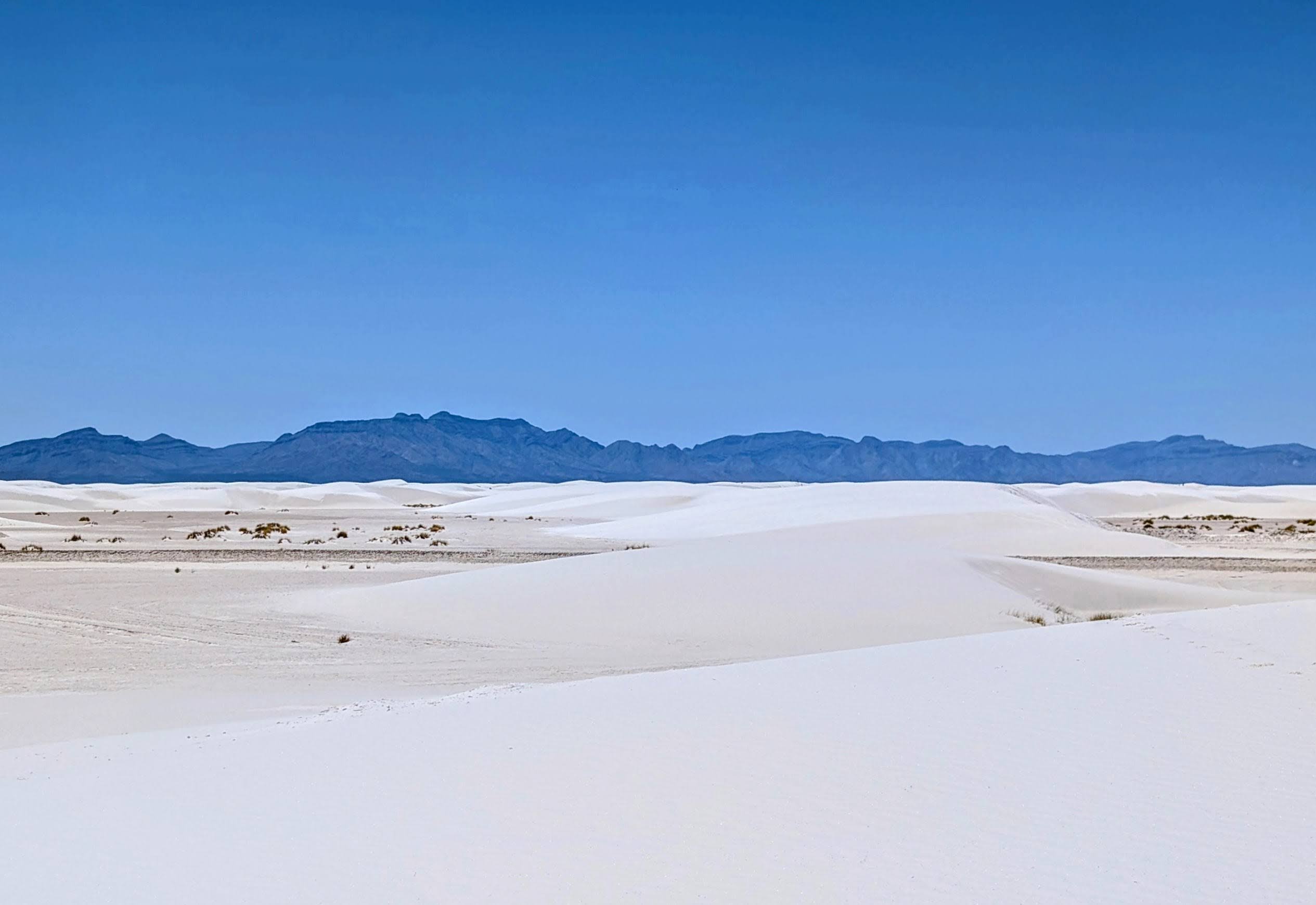
Wednesday was a lazy drive south which would ultimately lead us directly up to our main event: the spectacular bat flight. We kicked off the day with a delicious brunch complete with tasty mimosas (you have to stay hydrated, after all), which meant Mr. Tabby Cat got first shift on driving while I happily enjoyed the passenger seat. We also made sure to pack a picnic lunch and plenty of cold drinks. Restaurants are virtually nonexistent on this route, but White Sands features some fantastic, retro-shaded picnic areas. It is the absolute perfect spot to pull over and enjoy a lunch break, but only if you come prepared to self-cater. With our logistics fully sorted, we drove south toward the alien landscape of White Sands National Park.
The Gypsum Wonder
Driving in from town, you catch your first glimpse of it miles before the park entrance: a weird, shimmering white wave sitting mysteriously on the desert horizon. Once you cross the gates, White Sands is a breathtaking, blindingly white expanse of pure gypsum sand, looking like a polar ice cap dropped into the middle of the Chihuahuan Desert.
TCT Tip: The Missile Range Closure Factor: White Sands National Park is entirely surrounded by the active military testing grounds of the White Sands Missile Range. Because of this, both Highway 70 and the park itself are periodically closed for up to three hours during missile tests. Always make a point to check the park’s official alert page or call the visitor center before making the drive so your afternoon picnic plans don’t get locked out by national defense operations.
Unlike standard silica sand, gypsum does not absorb heat from the sun. Even in the dead of summer, you can kick off your sandals and walk barefoot across the cool, damp dunes. It is an ethereal, almost silent landscape, except for the joyful shrieks of children sledding down the steep white dunes on plastic saucers, which is easily the most popular activity in the park. We drove the iconic 8-mile Dunes Drive, stopping frequently for short, off-trail walks to capture those pristine, horizon-less photos where the white earth bleeds seamlessly into the cobalt sky, or the iconic ones with the purple mountains rising dramatically in the distance.
Carlsbad Bat Flight Program
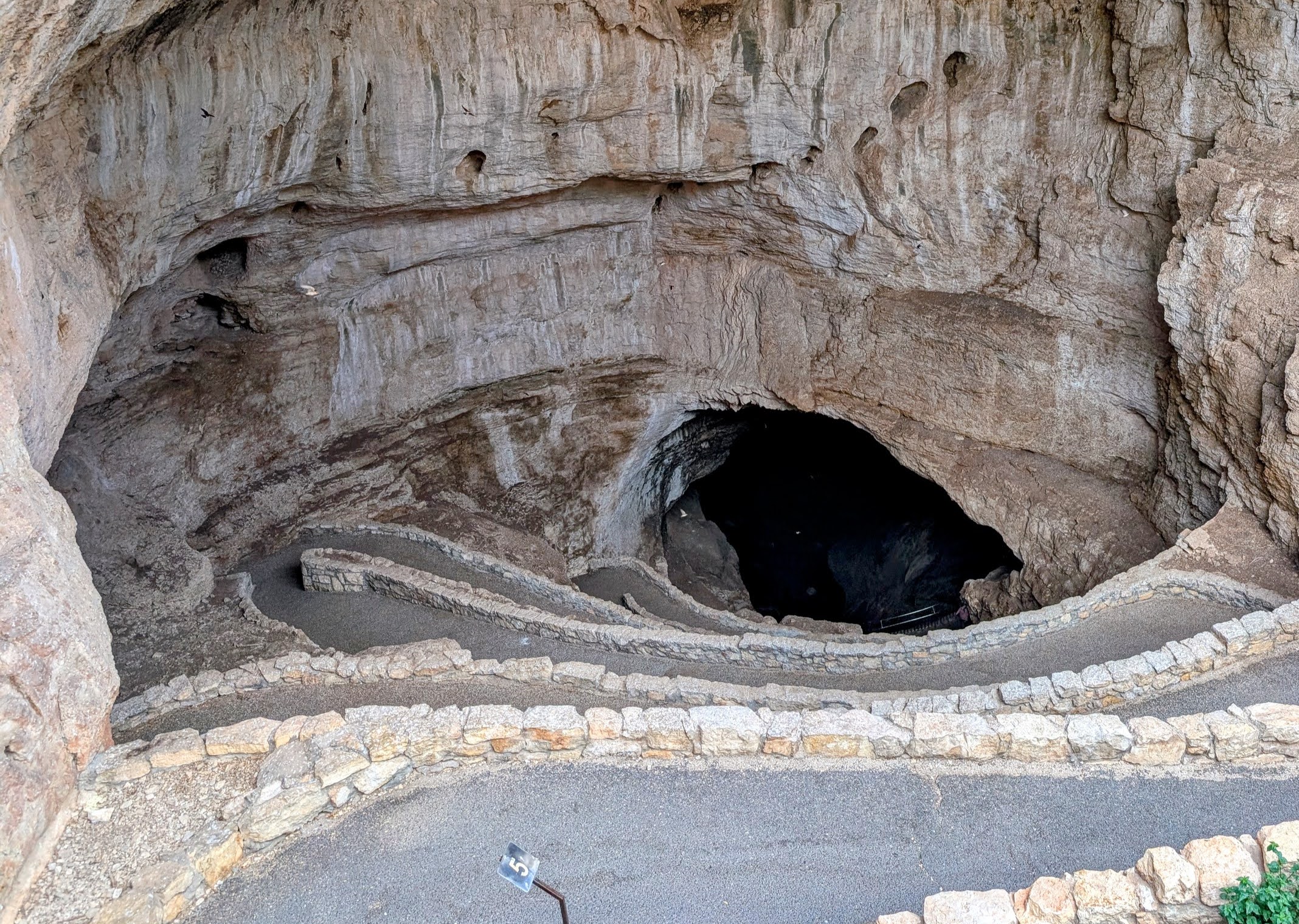
From White Sands, we pushed east through the rugged Sacramento Mountains to reach Carlsbad Caverns in time for the evening show.
Every evening from late May through October, a colony of up to 400,000 Brazilian free-tailed bats emerges from the depths of the cavern to hunt. It is a stunning natural phenomenon, but there is no need to stress about exact timing or feel rushed (the bats certainly don’t). The park rangers run an incredibly informative program at the amphitheater that starts about 30 to 45 minutes before the flight, sharing fascinating insights about bat biology, migration, and their role in the desert ecosystem. Keep in mind that the bats operate strictly on their own schedule rather than our vacation itineraries - they will fly whenever they are ready - so prepare to be patient!
TCT Tip: Securing the Perfect Seat: The Bat Flight Program takes place in a stone amphitheater built around the natural mouth of the cave. The best seats are on the right-hand side, roughly two-thirds of the way up. This position gives you a perfect angle to watch the bats spiral upward against the backdrop of the night sky without getting a kink in your neck.
- The Day Shift: Don’t be fooled by the thousands of small, darting birds flying in and out of the cave entrance prior to dusk. Those are cave swallows (the “day shift”), and they put on an incredible pre-show.
- The Strict Rule: Absolutely no electronic devices (phones, cameras, smartwatches, etc.) are allowed to be turned on during the flight. The light and frequencies disrupt the bats’ echolocation. It is a rare, beautiful moment of forced presence. Watching a silent, swirling tornado of black wings rise from the dark earth is something you must experience with your eyes, not a screen.
The Logistical Caveat (How to Avoid a Hangry Meltdown): The bats operate on their own clock, leaving exactly at dusk (around 8:15 PM during our visit) and continue lazily spiraling out for at least half an hour before it gets too dark to see them. By the time you walk back up to your car and drive the 30 minutes back to the town of Carlsbad, it will be past 9:30 PM.
Here is the planning error I will humbly admit to: Carlsbad is a sleepy, industry-driven town where local, non-chain-restaurants close early. We arrived back in town completely starved, only to find our dining options limited to fast-food drive-thrus or Chili’s. (We ended up choosing Chili’s. Shoutout to the waitstaff who definitely had a late night serving all the other hangry bat-watchers who poured in with us).
TCT Tip: Grab an early dinner around 5:30 PM before you head to the park. For the late May time period, on a non-weekend day, you could easily arrive at the amphitheater by 7:15 PM and find seating. Or if you don’t want to risk that, double up on that picnic platter to make sure you have plenty of food waiting for a post-bat hotel room feast.
Day 6 & 7: Subterranean Mastery & The Durango-Silverton Steam Train
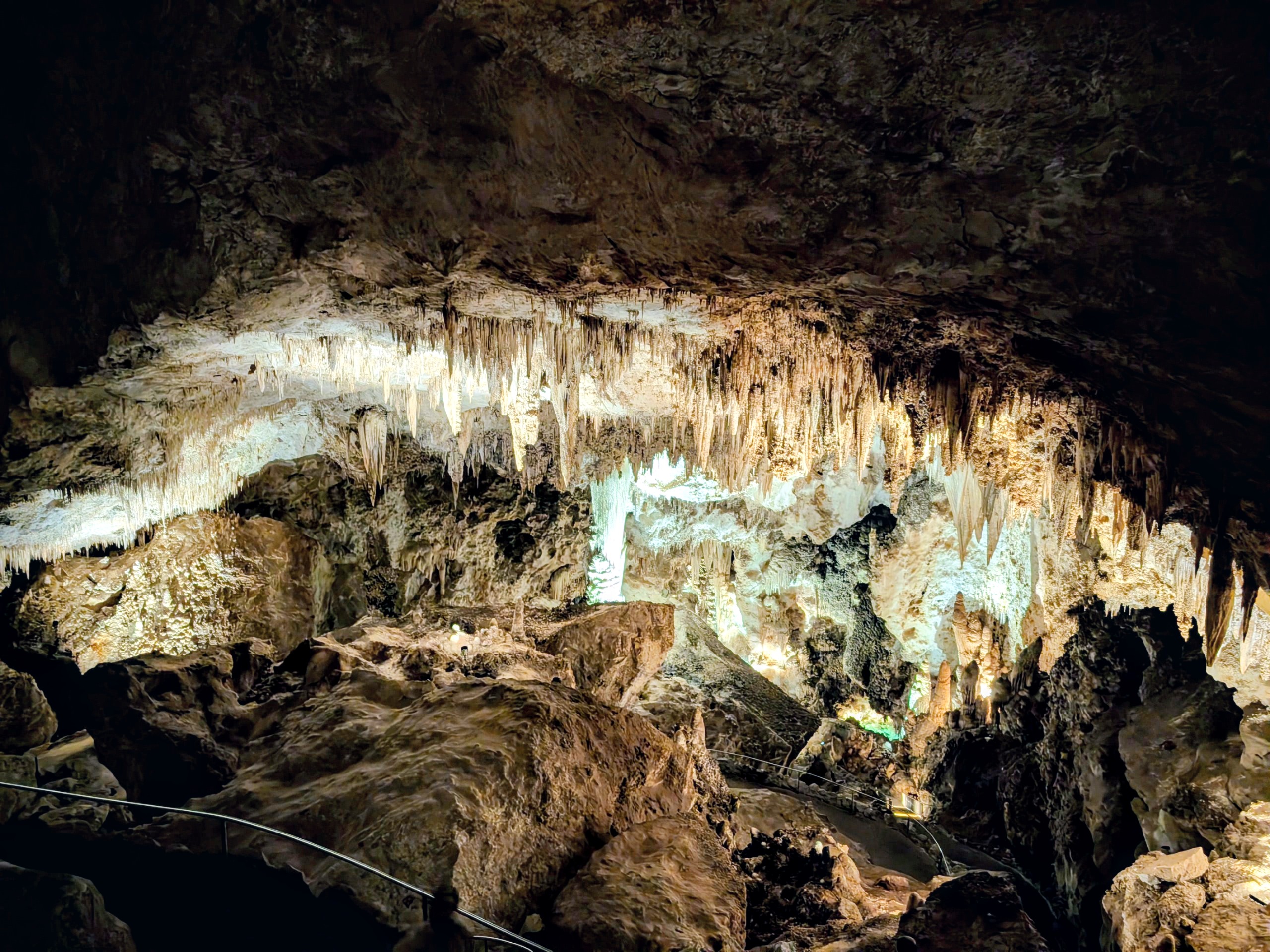
Thursday morning, we descended 750 feet into the belly of the earth via the Natural Entrance of Carlsbad Caverns.
While most visitors take the elevator straight down to the “Big Room” to save their knees, for us hiking the Natural Entrance was an absolute must. The path is paved and features a handrail the entire way, though some of the steeper sections get damp from the cave humidity and can become incredibly slippery. Walking down into the gaping mouth of the cave feels like a journey into a Jules Verne novel.
Carlsbad is not your average water-dripped cave. It was literally carved out from the bottom up by sulfuric acid, leaving behind massive, cathedral-like chambers. The Big Room is the largest single cave chamber by volume in North America; you could comfortably fit six football fields inside it.
After taking the high-speed elevator back to the surface (because hiking 750 feet back up is a hard pass) and buying an adorable tiny bat plushie for the kittens at home, we began our longest transit day, driving north across New Mexico and crossing back into Colorado to sleep in the historic mountain town of Durango.
The Silverton Steam Train – Premium Class Execution
 Friday was dedicated to one of the greatest historic rail journeys in the world: the Durango & Silverton Narrow Gauge Railroad.
This is a spectacular steam-powered locomotive journey that has been chugging along the sheer cliffs of the Animas River since 1882. While these legendary engines historically burned coal, the railroad has smartened up, converting almost its entire active steam fleet to run cleanly on recycled oil to prevent forest fires in the dry Colorado canyons. And while stunning, remember it is historic, and, if you book standard coach class, it will be a 3.5-hour exercise in squeezing into cramped, hot bench seats next to screaming toddlers.
TCT Tip: The Rail Upgrade Blueprint: Do not, under any circumstances, skimp on your train tickets. Book the Premium or First-Class Cars. Specifically, look for First Class options like the Alamosa Parlor Car (strictly 21+ only, featuring a private bar and personal host) or if you are traveling with family but still want to bypass standard coach, the San Juan is an excellent Premium Class alternative - it’s open to all ages, but offers comfortable, roomy seating that makes the long trip highly enjoyable.
The train slowly winds its way parallel the Animas River along sheer granite cliffs to the historic, Victorian-era mining town of Silverton, stopping three times along the way to pump thousands of gallons of water into the steam boiler.
TCT Tip: For those Short on Time: The Bus Up or Back: Not everyone has time (or patience) for the full roundtrip train ride. For those people there’s the option to bus up and train down, or train up and bus down. By taking the luxury motorcoach to or from Durango, you save two hours and get to see the “Million Dollar Highway” from a different vantage point.
We spent our last evening in Durango enjoying the up and coming restaurant scene before calling it a night.
Day 8: The Grand Junction Wine Route
 On Saturday, we began our final northward push toward Grand Junction, taking a detour through the lush orchards and vineyards of Palisade, Colorado.
Palisade is the crown jewel of the Grand Valley AVA (American Viticultural Area which is a federally designated wine-growing region). The region benefits from a unique meteorological phenomenon called the “Palisade Fruit Float”: a constant, warm thermal downdraft coming off the massive Grand Mesa that protects the valley floor from early frosts.
We stopped at Talon Winery, which is famous not only for its classic varietals but also for its incredibly unique, dry fruit wines and artisanal meads.
TCT Tip: The Dry High-Desert Illusion: When tasting in Palisade, keep in mind that “dry” in Colorado often skews slightly sweeter than a traditional European profile. If you prefer a bone-dry, high-acid white, ask specifically to taste their Cabernet Franc rosés or high-altitude Viogniers. Pair your tasting with one of their curated, locally sourced charcuterie boards.
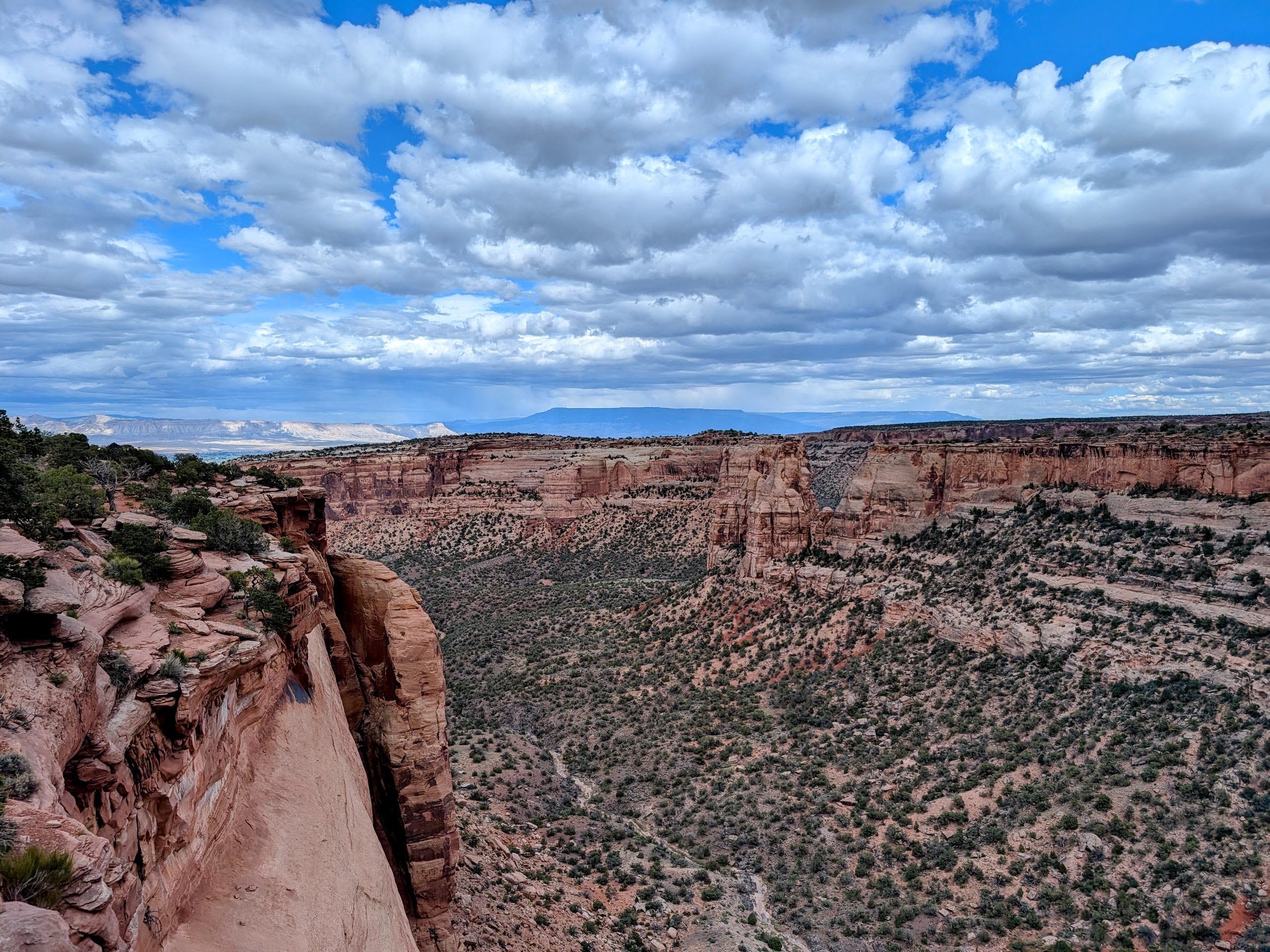
To burn off the cheese, we headed straight for the Devil’s Kitchen Trail, a moderate, 1.5-mile scramble located just inside the entrance of Colorado National Monument, affectionately known as the “Mini-Grand Canyon.”
We laced up our boots for the hike, which leads you up a series of slickrock slopes (follow the stone cairns!), where, I must admit, my husband actually looked like he was starting to find his own mountain goat roots. The trail guides you into a natural, outdoor “room” formed by giant, 150-foot sandstone monoliths. It’s incredibly breezy, entirely shaded, and offers spectacular views of the Grand Valley below.
Afterward, we spent the rest of the afternoon cruising the spectacular 23-mile Rim Rock Drive winding through the rest of the monument.
We celebrated our final night of the circuit with one last wine tasting at the Carlson Vineyards downtown tasting room, followed by excellent local drinks and food at Rockslide Brewery.
Day 9: The Final Ascent Home
On Sunday morning, eager to get back to Park City to snuggle our two very spoiled kittens, we packed the car one last time and made the final drive home.
The Planning Deep Dive: How to Survive a 9-Day Loop
If you’re ready to tackle this 1,200-mile monster, here is your logistical checklist to ensure you survive with your style intact:
- The Hydration Matrix: High-altitude desert air will dehydrate you before you even feel thirsty. Keep your car’s chilled cooler stocked with plenty of water, cold brews, and perhaps a sneaky split-bottle of Sauvignon Blanc. When hitting the trail, make sure you take a dedicated daypack with at least one liter of water per person, per hour. Mix in some electrolyte packets to refresh your body on the fly; your skin and your muscles will thank you.
- The Mid-Trip Reset is Mandatory: Never plan more than three consecutive days of heavy driving or hiking. Your body, and your travel partner’s sanity, will thank you for that Day 4 pause.
- Strategic Mode Switching: Embracing a vibrant mix of hiking, river rafting, historic trains, and open highway exploration keeps the travel novelty high and prevents road trip fatigue from setting in.
- The Luxury Upgrade Rule: For popular historic attractions like the Silverton train, budget tickets are usually a scenic discomfort trap. When possible, pay the premium for first-class adults-only cabins or premium viewing spaces to secure your personal bubble and always make sure you know where the bar car is.
- The Dining Dead-Zone: Always research the kitchen hours of your destination. If you are arriving late from a sunset overlook or a bat flight, pre-pack a tasty picnic for your hotel room or secure a late-night reservation well in advance.
- The National Park Pass Hack: While saving money may not be your primary driver, it never hurts. Buying the pass easily saved us a bundle on entry fees. As a bonus logistical tip, if you purchase the pass at a park gate, most of those funds directly support that specific park’s local budget. If you buy it online, the money is distributed across the entire federal system. Opt for the gate purchase to keep your trail dollars local.
Final Thoughts & Anticipation
This Southwest Circuit was one more beautiful, dusty reminder of why I chose to start building a life out west. Within a single road trip, you can transition from 500-million-year-old crimson arches to subterranean cathedrals and high-altitude alpine valleys.
It required high-SPF sunscreen, several killer playlists, and a forced appreciation for New Mexico green chiles.
If you want to execute an epic adventure like this but don’t want to deal with the headache of securing timed-entry permits, booking river guides, or mapping out high-altitude wineries… well, you know where to find me.
Next up on my personal radar? We are heading back south to revisit our old stomping grounds! Expect plenty of high-humidity hijinks as we tackle Savannah and Orlando at the end of summer, followed by one absolutely massive European adventure I can’t wait to share. In the meantime, keep your eyes on this space and stay tuned for future updates!